Key Takeaways
- Mocktails are not universally safe or unsafe for people in recovery; the right choice depends on an individual’s triggers, stage of recovery, and personal history with alcohol.
- The look, smell, and ritual of a mocktail can trigger cravings for some people, even though the drink itself contains no alcohol.
- “Non-alcoholic” doesn’t always mean alcohol-free; some non-alcoholic beers and wines contain trace amounts of alcohol, so checking labels matters.
- Non-mimicking alternatives, such as cider, hot chocolate, or herbal tea, combined with a solid relapse-prevention plan and support system, can help people in recovery navigate holiday gatherings safely.
Question:
Are mocktails safe for people in recovery from alcohol addiction?
Answer:
Non-alcoholic mocktails have become a popular holiday option, but they aren’t automatically the safest choice for everyone in recovery from alcohol addiction. Because mocktails often replicate the taste, appearance, and ritual of alcoholic cocktails, they can trigger cravings or emotional associations for some individuals, particularly those in early recovery or with strong ties to specific past drinks. This blog explores the difference between mocktails, non-alcoholic beer and wine, and alcohol-free spirits, along with why “non-alcoholic” doesn’t always mean zero alcohol content. It also covers common relapse triggers during the holidays, questions to help readers assess their own risk, alcohol-free alternatives that don’t mimic cocktails, and practical strategies for navigating parties while staying sober. The post closes by highlighting how Sound Recovery Centers in Lacey, Washington, helps guests build long-term relapse-prevention skills through PHP, IOP, outpatient care, and sober living.
Non-alcoholic drinks have become a fixture at holiday parties, restaurants, and family gatherings. Walk into nearly any bar this December and you’ll likely find a mocktail menu sitting right alongside the regular cocktail list. For many people, this shift feels like progress. It signals that celebrating without alcohol no longer has to mean sipping water in the corner.
For someone in recovery from alcohol addiction, mocktails can seem like the obvious solution. They offer the taste, presentation, and social experience of a cocktail without the alcohol content. But is that always a good thing?
The honest answer is that it depends. Recovery is deeply personal, and what feels completely harmless to one person might create cravings or emotional discomfort for someone else. A mocktail that helps one guest feel included at a holiday party might be the exact trigger that sends another person’s mind racing back to old drinking habits. Understanding this distinction, and learning how to apply it to your own recovery, can make the difference between a comfortable holiday season and a genuinely risky one.
What Are Non-Alcoholic Mocktails?
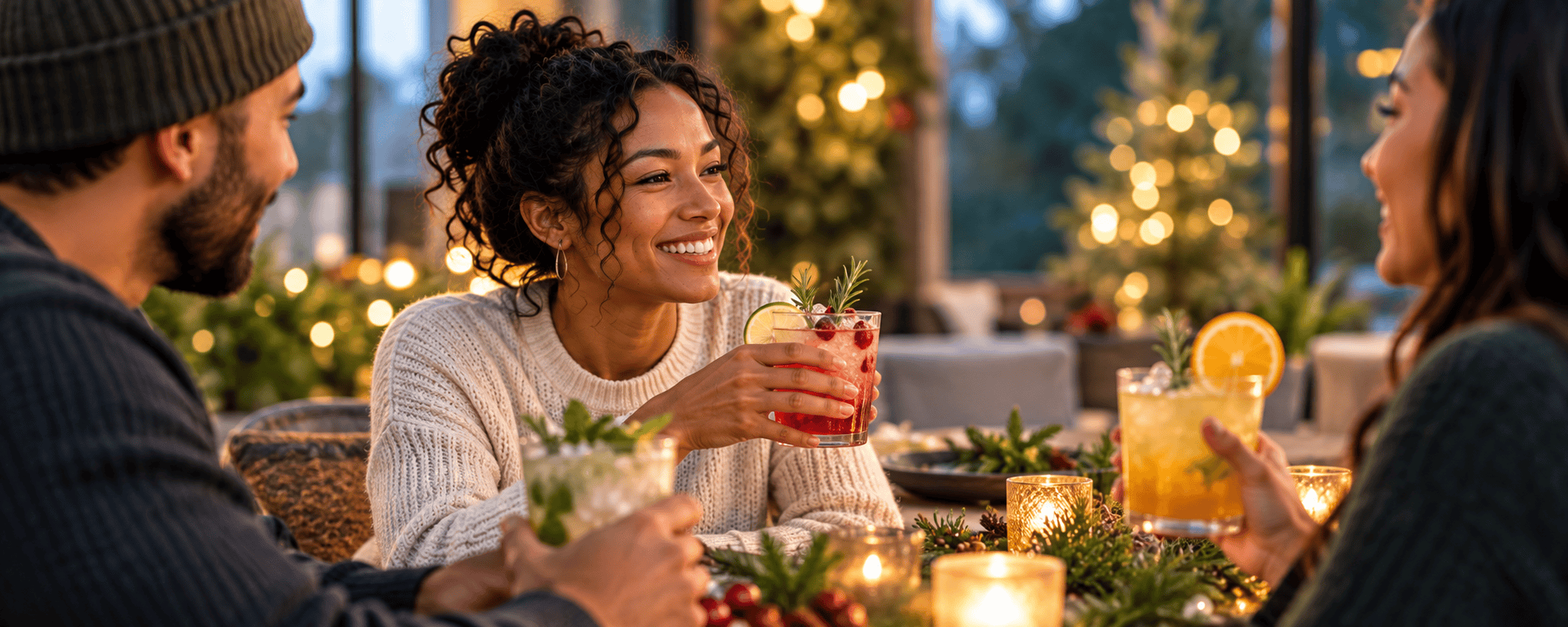
A mocktail is a beverage made to resemble a cocktail in appearance and flavor, but without alcohol. Think of a Virgin Mojito made with mint, lime, and soda water, or a holiday-themed “Cranberry Fizz” served in a martini glass with a sugared rim. Mocktails are built entirely from alcohol-free ingredients, such as juices, syrups, herbs, and carbonated mixers.
Mocktails vs. Non-Alcoholic Beer, Wine, and Spirits
While mocktails are made without any alcohol-based ingredients, other alcohol-free beverages work differently:
- Non-alcoholic beer and wine are brewed or fermented like their alcoholic counterparts, then have most (but not always all) of the alcohol removed.
- Alcohol-free or “zero-proof” spirits are distilled alternatives designed to mimic the flavor of gin, whiskey, or rum without the alcohol content.
- Traditional mocktails typically skip the brewing or distilling process altogether and are mixed from naturally alcohol-free ingredients.
Here’s an important distinction: “non-alcoholic” doesn’t always mean completely alcohol-free. Many non-alcoholic beers, for example, still contain trace amounts of alcohol, usually under 0.5% ABV. For someone in recovery, this detail matters, which makes reading labels a genuinely useful habit rather than an overcautious one.
Why Are Mocktails So Popular During the Holidays?
A few factors have driven the mocktail trend during Thanksgiving, Christmas, and New Year’s celebrations:
- They allow people to participate in toasts and celebratory traditions without drinking alcohol.
- More restaurants, bars, and holiday event venues now offer dedicated non-alcoholic drink menus.
- Social pressure to drink during the holidays has led many people, including those not in recovery, to look for lower-alcohol or alcohol-free options.
This growing accessibility is a genuinely positive shift for the sober and sober-curious community. But accessibility doesn’t automatically mean safety for every individual in recovery.
Are Non-Alcoholic Holiday Mocktails Safe for People in Recovery?
Mocktails can be an appropriate, even enjoyable, option for some people in recovery. For others, they aren’t the best choice. Recovery is not a one-size-fits-all process, and a drink that feels neutral to one person may carry real emotional weight for another.
Someone with a strong personal history tied to a specific cocktail, or who finds themselves craving the ritual of drinking more than the taste of alcohol itself, may find that a mocktail version of that same drink stirs up memories, cravings, or emotional associations they’d rather avoid. This doesn’t mean something is wrong with that person’s recovery. It simply means their triggers are specific, and recognizing them is a sign of self-awareness, not weakness.
Why Can Mocktails Trigger Alcohol Cravings?
Familiar Tastes and Smells
Taste and smell are closely linked to memory. A mocktail designed to taste like a margarita or an old fashioned can bring back sensory memories tied to past drinking, even without a drop of alcohol involved. For some people in recovery, that sensory familiarity alone is enough to spark a craving.
The Ritual of Drinking
For many people, alcohol use was never just about the liquid in the glass. It was about the cocktail glass itself, the garnish, the act of ordering a drink at a bar, or holding something in hand while mingling at a party. Mocktails often recreate every part of that ritual except the alcohol, which means the behavioral and emotional cues connected to drinking can remain fully intact.
Being Around Other People Who Are Drinking
A mocktail itself might contain zero alcohol, but the environment surrounding it still matters. Holiday parties often involve increased alcohol availability, open bars, and a festive atmosphere that can heighten temptation. Even with an alcohol-free drink in hand, standing near a bar or around guests who are drinking can still introduce relapse triggers.
Does “Non-Alcoholic” Mean There Is No Alcohol?
Not always. Labeling laws and marketing terms vary, so it’s worth understanding the difference:
- Non-alcoholic: Often used for beer and wine that has undergone a dealcoholization process, which may leave trace alcohol behind (commonly under 0.5% ABV).
- Alcohol-free: Generally indicates 0.0% alcohol content, though this isn’t guaranteed unless clearly labeled.
- Zero-proof: Typically refers to spirit alternatives with no alcohol, though terminology can vary by brand.
- 0.0% ABV: The clearest labeling, specifically confirming no measurable alcohol content.
Anyone who wants to avoid alcohol completely should check the label rather than relying on front-of-package marketing. This is especially important at holiday parties, where homemade mocktails can sometimes be mixed up with alcoholic versions, particularly if drinks look similar or are set out on the same table without clear labeling.
Who May Want to Avoid Holiday Mocktails?
Mocktails aren’t the right fit for everyone in recovery. It may be worth avoiding them if you:
- Are in early recovery, when cravings and triggers tend to be strongest
- Experience frequent alcohol cravings
- Associate specific cocktails with past alcohol use
- Find bars or drinking-focused environments triggering
- Feel uncomfortable “pretending” to drink, even with a non-alcoholic beverage
- Have a treatment or relapse-prevention plan that specifically recommends avoiding alcohol-like beverages
Choosing to skip mocktails doesn’t mean missing out on holiday celebrations. It simply means choosing a different kind of drink, one that supports your recovery rather than tests it.
Are you struggling with substance abuse and mental illness?
Royal Life Centers at Sound Recovery is here to help you recover. Because We Care.
How Can I Tell if Mocktails Are a Trigger for Me?
Questions to Ask Yourself
Before reaching for a mocktail at your next holiday gathering, consider asking yourself:
- Does this drink make me think about alcohol?
- Am I craving the alcoholic version of this drink?
- Does the taste or smell remind me of drinking?
- Am I enjoying this drink, or do I just miss the experience of drinking?
- Do I feel more tempted to drink alcohol after having it?
- Would a different type of beverage make me feel more at ease?
There’s no wrong answer here. The goal is simply to build awareness of your own response, so you can make choices that genuinely support your recovery.
Talk to Someone in Your Recovery Support System
If you’re unsure whether mocktails are a safe choice for you, bring it up with a therapist, sponsor, peer support specialist, or trusted friend or family member. Being honest about an unexpected trigger, even one as small as a drink, isn’t something to feel embarrassed about. It’s a normal, healthy part of navigating long-term recovery.
Alcohol-Free Holiday Drink Alternatives That Don’t Mimic Cocktails
For those who’d rather sidestep the cocktail association altogether, plenty of festive options exist that don’t resemble alcoholic drinks at all:
- Sparkling water with fresh fruit
- Flavored seltzer
- Hot chocolate with holiday spices
- Warm apple cider
- Coffee or specialty coffee drinks
- Herbal tea
- Fruit-infused water
- Seasonal punches made from clearly alcohol-free ingredients
|
Drink Type |
Resembles Alcohol? |
Potential Trigger Considerations |
|---|---|---|
|
Mocktails (e.g., Virgin Mojito) |
Yes, in taste, appearance, and ritual |
May trigger cravings tied to sensory memory or past drinking rituals |
|
Non-alcoholic beer or wine |
Yes, in flavor and branding |
May contain trace alcohol; can trigger cravings through taste familiarity |
|
Non-mimicking drinks (cider, cocoa, herbal tea) |
No |
Lower likelihood of triggering alcohol-related associations |
How to Handle Alcohol at Holiday Parties While in Recovery
Navigating a party where alcohol is present takes some preparation, but it’s entirely manageable with the right strategy:
- Bring your own preferred alcohol-free drink
- Prepare a simple response in case someone offers you alcohol
- Tell a trusted person at the event that you aren’t drinking
- Avoid spending extended time near the bar or drink table
- Bring a sober or supportive friend with you
- Arrange your own transportation or have an exit plan ready
- Stay connected with your recovery support system throughout the event
- Give yourself permission to leave if cravings become strong
How Can Hosts Support Someone in Recovery During the Holidays?
If you’re hosting a holiday gathering, small adjustments can make a meaningful difference for guests in recovery:
- Don’t pressure anyone to drink
- Avoid asking why someone isn’t drinking
- Offer multiple alcohol-free options so no one feels singled out
- Ask guests directly what beverages would make them comfortable
- Clearly separate alcoholic and non-alcoholic drinks, with distinct labeling
- Respect a guest’s decision to skip the event or leave early
- Don’t assume a mocktail is automatically the “safe” choice for someone in recovery
What Should I Do if the Holidays Are Making Me Want to Drink?
It’s completely normal to feel additional stress and cravings during the holiday season. Family dynamics, grief, financial pressure, and packed schedules can all add weight to a time of year that’s supposed to feel joyful.
If you notice cravings building, try to identify the specific people, places, emotions, or situations behind them. Revisit the coping skills and relapse-prevention strategies you’ve built in treatment, and don’t hesitate to increase contact with supportive people when you need it most. According to SAMHSA, ongoing treatment and consistent relapse-prevention planning are key components of long-term recovery, particularly during high-stress periods like the holidays. Treatment can help you identify your unique triggers and develop healthier, more sustainable responses to cravings.
Building Relapse Prevention Skills at Sound Recovery Centers
Holiday-specific coping strategies are valuable, but lasting recovery is built on an ongoing foundation of support. Sound Recovery Centers provides continuing addiction treatment in Lacey, Washington, including partial hospitalization (PHP), intensive outpatient (IOP), outpatient care, and sober living.
Our programs are designed to help guests identify their personal triggers, develop practical coping skills, and build a sustainable, sober support network. Through individual and group therapy, relapse-prevention education, and the development of healthy daily routines, guests gain the tools they need to navigate challenging moments, whether that’s a holiday party, a stressful week, or an unexpected craving.
If you’re struggling with alcohol cravings this season, or simply feeling uncertain about how to navigate the holidays safely, you don’t have to figure it out alone. Our team can walk you through the admissions process and help you verify your insurance so you can focus on what matters most: your recovery.
Frequently Asked Questions
Are mocktails okay for recovering alcoholics?
It depends on the individual. Some people in recovery can enjoy mocktails without issue, while others find that the taste, appearance, or ritual of a mocktail triggers cravings or emotional associations tied to past alcohol use.
Can non-alcoholic drinks trigger alcohol cravings?
Yes. Sensory cues like taste, smell, and the ritual of drinking can trigger cravings, even when a beverage contains no alcohol.
Can non-alcoholic beer cause a relapse?
It’s possible for some people, especially if the familiar taste or branding of non-alcoholic beer triggers cravings for the alcoholic version. Additionally, some non-alcoholic beers contain trace amounts of alcohol, which may be a concern for certain individuals in recovery.
Do non-alcoholic drinks contain any alcohol?
Sometimes. “Non-alcoholic” beverages, particularly beer and wine, can contain trace alcohol (often under 0.5% ABV). “Alcohol-free” and “0.0% ABV” labels typically indicate no alcohol content, but it’s always best to check the label.
Is 0.0% alcohol safe for someone in recovery?
For many people, yes, since 0.0% ABV beverages contain no alcohol. However, individual comfort levels vary, and some people in recovery may still prefer to avoid alcohol-mimicking drinks altogether.
Why do the holidays trigger alcohol cravings?
Increased stress, family dynamics, grief, financial pressure, and greater alcohol availability at gatherings can all contribute to heightened cravings during the holiday season.
What can I drink at a holiday party instead of alcohol?
Sparkling water with fruit, flavored seltzer, hot chocolate, apple cider, coffee, herbal tea, and alcohol-free seasonal punches are all festive options that don’t mimic alcoholic drinks.
How can I avoid drinking during the holidays?
Prepare a response for when alcohol is offered, bring your own alcohol-free drink, avoid lingering near the bar, bring a supportive friend, and stay connected with your recovery support system throughout the season.
What should I do if someone offers me alcohol at a holiday party?
Having a brief, prepared response ready, such as “I’m not drinking tonight, but I’d love a soda water,” can help you decline comfortably without over-explaining yourself.
How can I support a sober friend or family member during the holidays?
Avoid pressuring them to drink, don’t ask why they aren’t drinking, offer alcohol-free options without singling them out, and respect their choice to leave early or skip an event if needed.
- Bowdring, Molly A., Geoffrey W. Rutledge, and Judith J. Prochaska. “Advising Patients on the Use of Non-Alcoholic Beverages That Mirror Alcohol.” Preventive Medicine Reports, vol. 47, 2024, article 102888. PubMed Central, https://pmc.ncbi.nlm.nih.gov/articles/PMC11437911/